Next of Kin - Chapter 18
WRITINGROYAL MARINES
Scott Barron
10/28/20254 min read
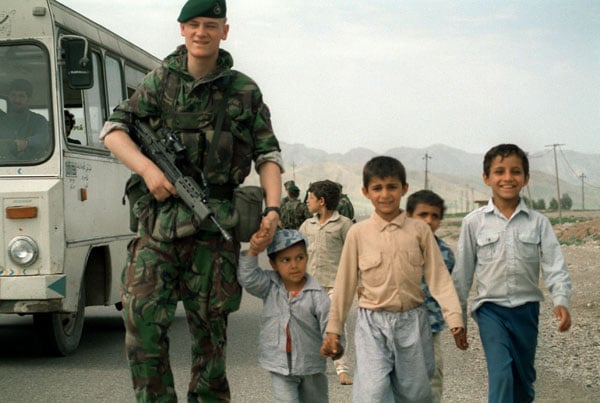
The Royal Marines have fought with distinction since their inception in 1664 when they were first known as the Duke of York and Albany's Maritime Regiment of Foot. They have battle honours stretching back centuries and their levels of fitness are renowned; as they showed in the Falklands War by marching over 80 miles following the loss of their troop-carrying helicopters when the Atlantic Conveyor ship was sunk. As an amphibious force the Royal Marines at the time had no armoured combat vehicles, and it was for this reason they had not been called on to become part of the plans for any potential land offensive in Iraq. The intelligence gathered suggested that the war would be fought in the desert and the planners favoured fast moving armoured units. The Royal Marines biggest strength, their ability to conduct raids launched from the sea and then march to their target, was believed to be of little use in an armoured assault in the deep desert. Desperate to have some involvement, they had reluctantly accepted to deploy, not as an attacking force, but in a humanitarian role in anticipation of the need to deal with the civilians who would flee to the relative safety of Syria and Northern Iraq until the war was over.
‘Operation Haven’ or ‘Operation Provide Comfort’, if you were American, would become the public name for the joint British and American effort to support the resettlement of the population who had been uprooted by war. It was intended to be a classic ‘hearts and minds’ approach that had been successfully used by the British all over the world in far-flung places such as Borneo, and, depending on the accent of the person you were talking with, to some extent in Northern Ireland. The American approach to winning ‘hearts and minds’ conjures up images of napalm drops and children fleeing from burning villages so they would be responsible for providing logistic support only.
Reconnaissance teams made up of Royal Marines and civilian aid workers had been established and had been carrying out air-to-ground inspections of potential field hospitals and refugee processing centres in Southern Turkey and Northern Iraq. In command of one such team was Royal Marine Colour Sergeant Ivan Hawley, a veteran of 19 years service. He had been involved in three tours of Northern Ireland during the controversial ‘shoot to kill’ era and had seen fierce fighting in the Falkland's War for which he had been awarded a Military Medal. Ivan had been part of a fighting patrol that had found itself in an Argentinian minefield before becoming pinned down by an enemy machine gun position. Ivan crawled though the minefield to the Argentineans position and took it out by throwing white phosphorous grenades into the bunker and then jumping into the trench to shoot the enemy soldiers. Once the battle for Mount Harriet was over and the minefield was made safe, it turned out that Ivan had crawled almost five hundred metres to the bunker and over two mines which had not gone off. Despite approaching forty years of age he was still a formidable character; despite being only five foot six and slightly built he commanded the respect of marines and officers alike. He was looking forward to retiring in three years time and hoped that this would be his last deployment.
Satisfied that they had achieved their aim, Ivan spoke into the microphone of his headset and told the American pilot of the Black Hawk helicopter to turn around to head back to their base in Southern Turkey. He looked around at his team made up of three marines and two volunteer medics from ‘Doctors without Borders’, who they had been ordered to protect whilst they carried out their ground surveys. His marines looked irritated, baby-siting civilians was not what they had completed 8 months of arduous basic training for, whilst Dominic Fuller and Jim Dunn, the two aid workers attached to his team, looked utterly exhausted. The early starts, late finishes and the constant bone rattling vibrations of the helicopters rotors could wear you out if you were not used to it. Hell, they wore you down even if you were used to it. There had been teething problems as you might expect when making elite fighting troops work with civilians who had different ideas and approaches, but Ivan had been impressed with Dominic and Jim. They had always turned up early, well prepared for the days tasks and conducted themselves in a professional manner; they were a real credit to the Manchester Royal Infirmary, the hospital which had let them have time off to take part in the operation. As experienced Accident and Emergency Doctors, Dominic and Jim’s experience might be useful should they be called upon to treat any refugees who might need it.
Bodies strained against shoulder straps as the helicopter banked sharply to the right as it changed direction and increased its speed at the same time to head away from their base in Turkey. The aid workers held on tight and anxiously watched Ivan’s face for clues of what might be happening as he listened to the message from the pilot. They watched him look at his marines as he said something into the headset before he removed it and hesitated before shouting over the din of the rotors.
‘We’ve been re-tasked - American SF team are in trouble, get ready, could be a hot LZ,’ he shouted to his marines who were already busy checking their equipment and ammunition.
‘We’ll need you two as well — sounds like they have casualties,’ he shouted to the medics.
Enjoy this post?